| Question | Turbo Poly Seal | Super Silicone Seal |
|---|---|---|
| How much repair does one gallon cover? | Approximately 35–40 linear feet using 4-inch fleece, including the first coat and topcoat. Coverage varies with surface texture, temperature and application thickness. | Approximately 40–45 linear feet using 4-inch fleece, including the first coat and topcoat. Coverage varies with surface texture and application thickness. |
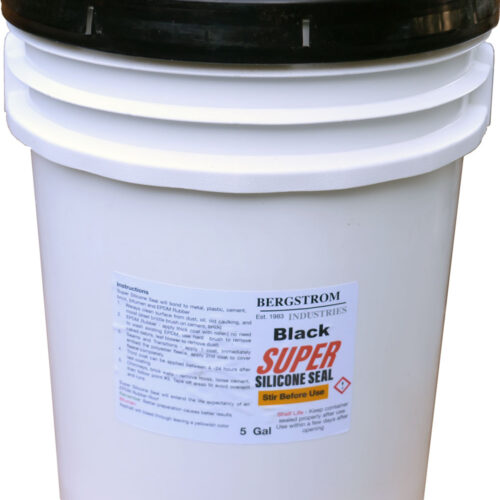
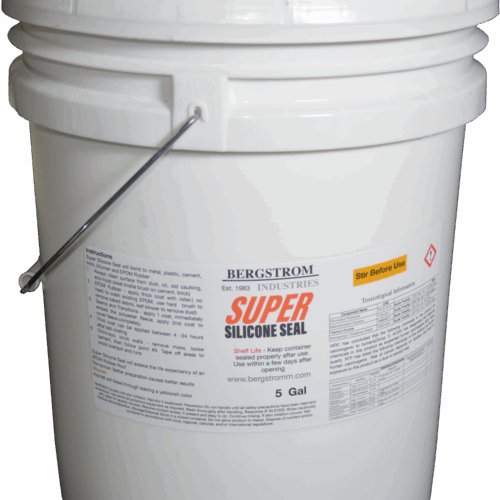
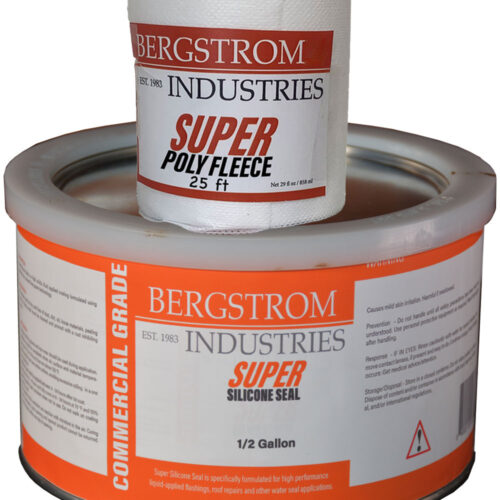
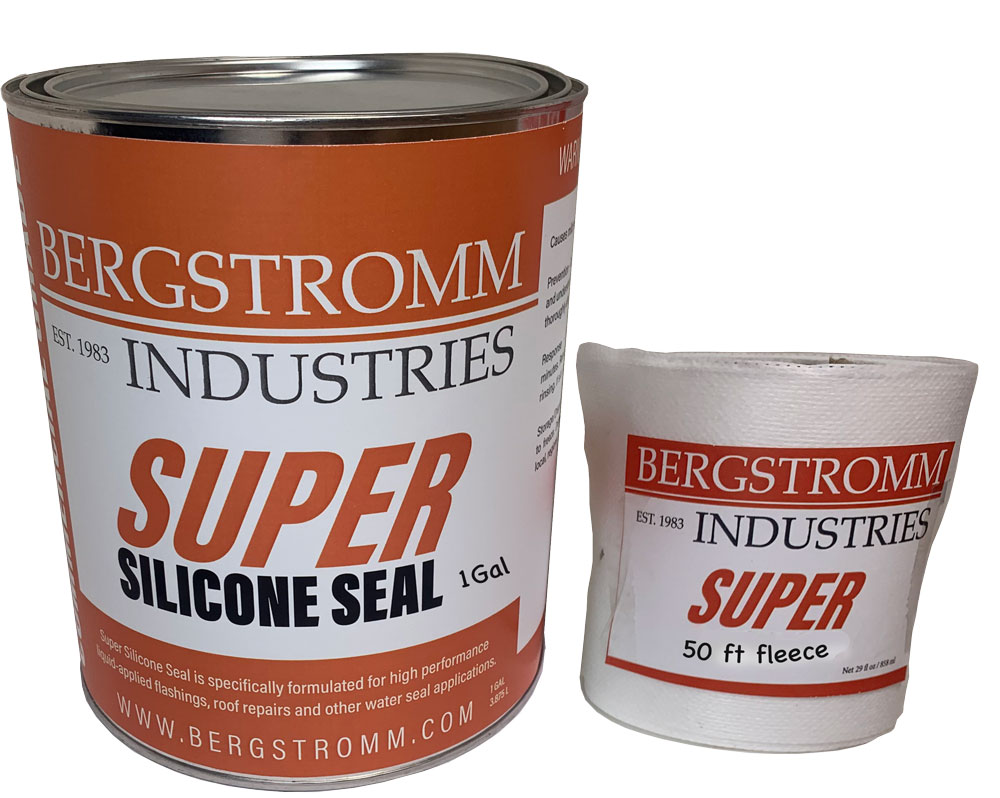
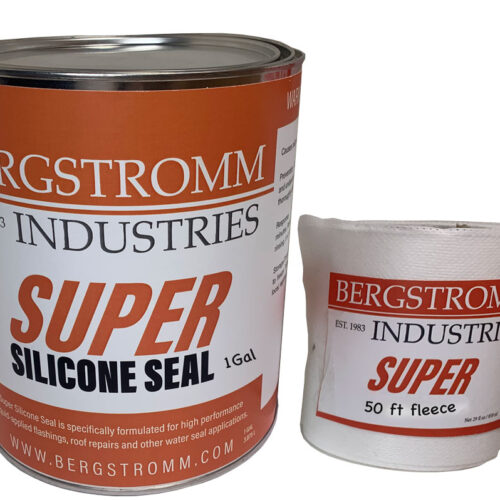
| How much fleece comes with the kit? | The 1/2-gallon kit includes 25 feet of 4-inch fleece; the 1-gallon kit includes 50 feet. The 2-gallon kit includes two 50-foot rolls. Included fleece length is not a sealant-coverage guarantee. | The 1/2-gallon kit includes 25 feet of 4-inch fleece; the 1-gallon kit includes 50 feet. The 5-gallon bucket does not include fleece. Included fleece length is not a sealant-coverage guarantee. |
| Can it be applied to a wet surface? | No. Prepare the surface and let it dry completely before applying Turbo Poly Seal. | No. Every application surface must be completely dry, including surfaces cleaned with a wet rag. |
| Can it be used on EPDM rubber roofing? | No. Do not apply Turbo Poly Seal directly to EPDM rubber roofing. | Yes. Apply to clean, completely dry EPDM. No sanding or primer is required. |
| Does it adhere to glass or Plexiglas? | Not to glass. It can bond to Plexiglas and metal for the documented skylight frame-to-Plexiglas repair. | Yes. It can bond to glass and Plexiglas for glazing-to-frame repairs. Follow the surface-specific preparation instructions. |
| Can it be applied over an existing silicone coating? | No. Remove silicone caulking and silicone roof coatings from the bonding area. | Firmly attached existing silicone coating can remain. Remove loose silicone, wipe clean with a wet rag and allow the surface to dry completely. |
| How is TPO prepared? | Wipe with a rag and lacquer thinner, remove silicone caulking from the repair area, and let the surface dry completely before applying sealant and fleece. | Wipe clean with a wet rag and let it dry completely. No sanding or primer is required. |
| Can it be applied over asphalt or torch-down roofing? | Yes. The repair area must be clean, completely dry and smooth enough for fleece to lie flat. Remove or smooth bumps before applying. | Do not use on asphalt or plain torch-down membrane. Granulated torch-down is suitable only while the granulated surface remains intact; use Turbo if preparation exposes plain asphalt. |
| How is a metal roof prepared? | Remove old repair materials and loose rust. Firmly attached original factory paint may remain. Clean the bonding area and let it dry completely. Do not add new primer or paint beneath the repair. | Remove dust, oil, debris and loose or flaking rust. Firmly attached factory paint may remain. Let the surface dry completely before application. |
| Should the product be stirred? | Yes. Stir thoroughly by hand until the sealant has a consistent brown appearance throughout. | Yes. Stir thoroughly. Use a drill with a paint-mixing attachment for a 5-gallon bucket; hand stirring is sufficient for smaller containers. |
| Can the sealant be thinned? | No. Use exactly as supplied. Do not add solvents or thinner. | No. Use exactly as supplied. Do not add solvents, thinner or other materials. |
| What brush should I use? | Use an inexpensive, 2-inch disposable brush. | Use an inexpensive, 2-inch disposable brush for repairs. Whole-roof coating uses a 1/2-inch-nap roller. |
| How are horizontal repairs reinforced with fleece? | Apply a thin first coat, immediately embed fleece, and apply a thick topcoat while the first coat is wet. Overlap adjoining fleece by 1/2 inch with sealant between the layers. Fully cover the fleece. | Apply a thick first coat, immediately embed fleece, and apply a thick topcoat. No wait is needed between these layers. Fully cover the fleece so no fabric pattern or exposed fleece remains visible. |
| How are upright flashing transitions repaired? | Bridge compatible, clean, dry wall and metal surfaces with fleece embedded in sealant, then fully cover the fleece. Existing groove filler can remain if it is not loose or preventing the fleece from lying flat; the repair must bond to the exposed compatible surfaces. | Apply a thin first coat and let it become tacky. Embed fleece and add another thin coat. Wait 30–45 minutes before the additional coat that fully covers the fleece. |
| How are metal-roof screws sealed? | After tightening the screw and seating the washer flat, cover the screw head and washer with a dab of sealant. No fleece is needed over the screw. | After tightening the screw and seating the washer flat, cover the screw head and washer with a dab of sealant. No fleece is needed over the screw. Patch abandoned screw holes with fleece and sealant. |
| How are metal-roof seams repaired? | Fasten separated panels tightly together before sealing. Reinforce the seam with fleece and sealant, following the panel profile. Keep seam fleece off the screws and seal screw heads separately. | Fasten separated panels tightly together before sealing. Reinforce the seam with fleece and sealant, following the panel profile. Keep seam fleece off the screws and seal screw heads separately. |
| Can it repair gutter seams? | Yes. Secure loose joints with commercial rivets, clean and dry the area, and seal from inside the gutter with fleece following the bottom and both sides. | Yes. Secure loose joints with commercial rivets, clean and dry the area, and seal from inside the gutter with fleece following the bottom and both sides. |
| Can it repair a concrete chimney crown? | Yes. Reinforce every crack with fleece and fully cover it. One coat on concrete covers approximately 15 square feet per 1/2 gallon; areas reinforced with fleece require more material. | Yes. Reinforce every crack with fleece and fully cover it. Follow the chimney-crown preparation and repair instructions; the surface must be completely dry. |
| Which skylight repairs can it be used for? | Primarily skylight curb flashing, especially curb corners. It can also seal the documented Plexiglas-to-metal-frame transition. It does not adhere to glass and is not a solution for every skylight leak. | It can seal compatible glass- or Plexiglas-to-frame joints using sealant and fleece. Clean and prepare the bonding areas, embed and fully cover the fleece, and remove masking tape immediately after the topcoat. |
| Can it repair a cracked EPDM vent boot? | Only as the documented reinforced cover anchored to the pipe above and the compatible roof surface below. It does not bond to EPDM. Follow the full vent-boot repair instructions. | Yes. Reinforce with fleece extending onto the pipe and compatible surrounding roof surface. Follow the thin-coat vertical method on upright sections. |
| What application temperatures are recommended? | Recommended air temperature: 20–110°F. Ideal: 25–90°F. The surface must be completely dry; cold weather slows curing and high heat makes the sealant runnier. | Recommended air temperature: 20–110°F. Ideal: 25–90°F. The surface must be completely dry. Cold weather delays rain readiness and curing. |
| How soon can rain fall on the repair? | Allow approximately 10–15 minutes as a conservative estimate; about 5 minutes may be enough on a warm day. Surface skin formation is different from full cure. Cold-weather timing varies. | Allow about 30 minutes on a warm day. Below 32°F, allow 3–4 hours. Rain readiness is different from full cure. |
| How long does curing take? | Allow approximately 24–48 hours as conservative guidance. Heat speeds curing; cold conditions slow it. | Allow approximately 24 hours under suitable conditions. Cold weather can extend curing time. |
| Can it be recoated with the same sealant? | A fresh repair can receive another coat within a few hours. Once cured, wait 6–12 months for the standard maintenance recoat and wipe the uncoated surface with a dry rag. Earlier recoating or repairs covered with paint or Silver Coat require the separate preparation instructions. | Yes. There is no mandatory waiting period for adding more sealant to a fresh repair, apart from the waits in the vertical application method. For an older repair, wipe clean with a wet rag and let it dry completely. |
| Can it be painted or given a protective coating? | Yes. Silver Coat or non-fibered aluminum asphalt is recommended for protective coating; paint can also be used. Follow the separate protective-coating instructions. | No paint or protective topcoat is needed. The sealant is UV-resistant and not paintable. It can be recoated with Super Silicone Seal. |
| How long can a properly applied repair last? | Bergstrom Industries estimates approximately 10–12 years without a protective coating. Actual service life depends on preparation, application and conditions. | Bergstrom Industries estimates approximately 12–20 years. Actual service life depends on preparation, application and conditions. |
| How should containers be stored? | Store tightly sealed in a cool place. Recommended use: unopened within 3–4 months of shipping; opened within 3–6 months. Uncured material may remain usable longer, but this is not guaranteed. | Store tightly sealed in a cool place. Recommended use: unopened within 3–4 months of shipping; opened within 3–4 months. Uncured material may remain usable longer, but this is not guaranteed. |
| What if a skin forms inside the container? | Remove the surface skin and use the uncured sealant beneath it. Do not use material that has hardened throughout. | Remove the surface skin and use the uncured sealant beneath it. Do not use hardened material. |
| How do I clean wet spills from tools or surrounding surfaces? | Wipe up the bulk with paper towels, then clean surface residue with lacquer thinner. Follow the cleaner's precautions. This is a surface-cleanup method, not a skin-cleaning instruction. | Immediately wipe off the uncured sealant with a damp rag. It is not water-soluble. Clean it up while it is still wet. |
| What common application mistakes should I avoid? | Poor preparation, insufficient stirring, exposed fleece, and voids where fleece does not follow the roof profile. Check and correct the repair while it is wet, and follow the recoating instructions. | Poor preparation, insufficient stirring, exposed fleece, and voids where fleece does not follow the roof profile. Follow the appropriate horizontal or vertical application method. |
Need more answers?
Explore preparation tips, repair instructions, and product information.