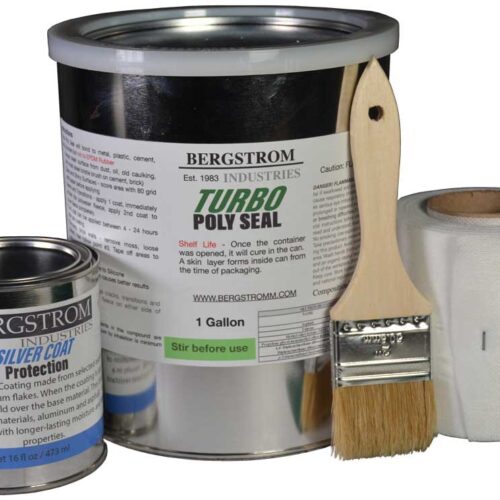
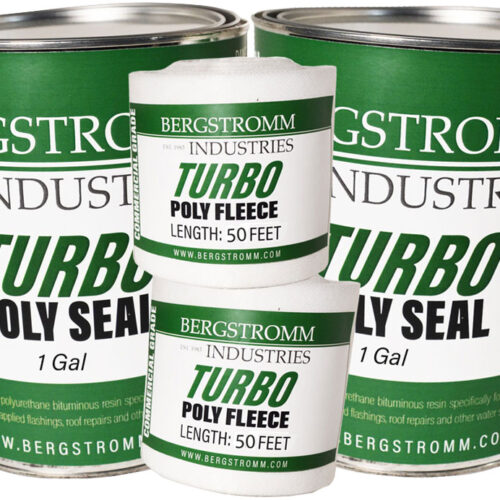
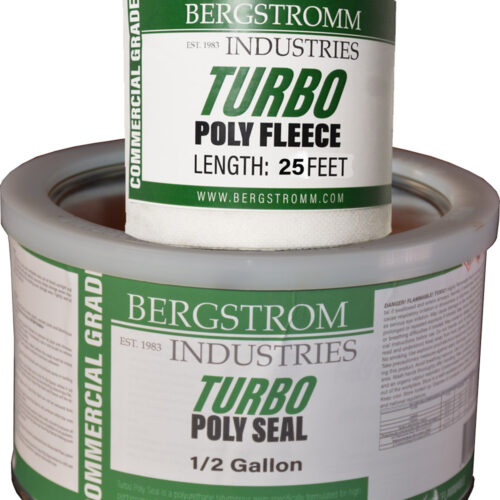
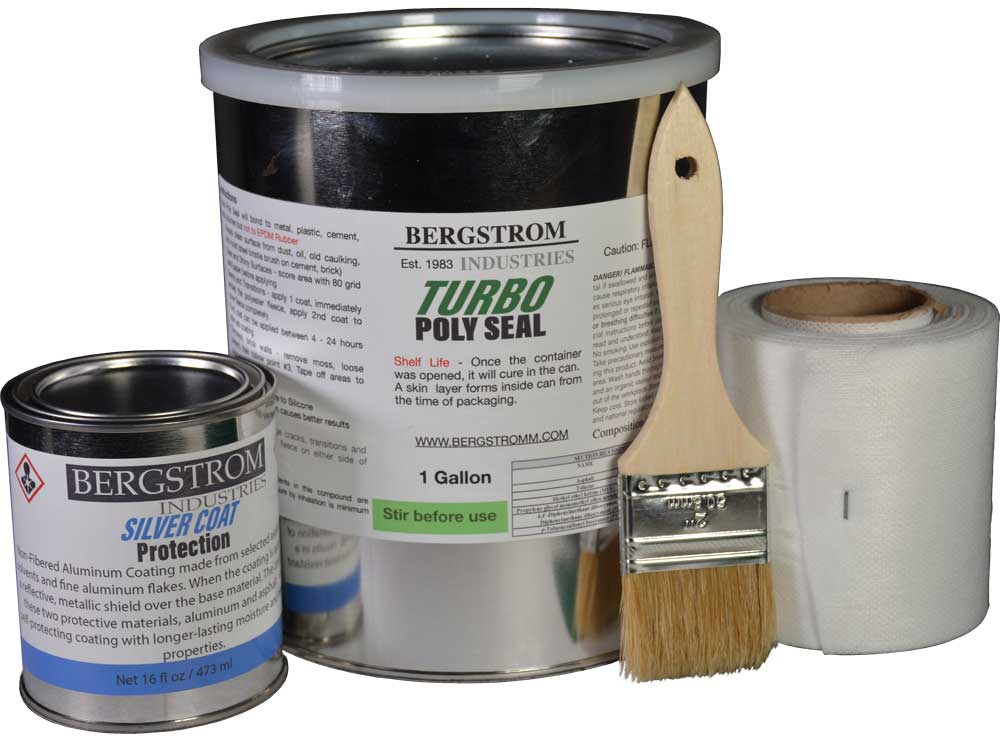
Turbo Poly Seal Roof Leak Seal 1 Gal /Silver 1 Pint/ 50 Ft Fleece/

Turbo Poly Seal is a versatile, easy-to-use leak repair sealant designed for metal roofs, flashing, rubber roofs, chimney caps, and concrete cracks. Formulated with a unique blend of urethane and asphalt, it delivers superior elasticity and strong adhesion. For added durability and to prevent cracking at transitions, apply polyester fleece over the sealant.

Turbo Poly Seal vs. Super Silicone Seal

Not sure which sealant fits your repair? Compare surfaces, applications, coverage, colors, and other key differences before choosing.

Important note: Please be aware that metal cans may arrive with dents due to shipping.

From: $265.00

No additional shipping charges on products below in this package

Asphalt and Tar Remover 4 oz

  • No Hassle Refunds
  • Secure Payments
Guaranteed Safe Checkout
SKU: TPS I Gal+Roll+Pint+Brush Categories: ,

Turbo Poly Seal vs Super Silicone Seal

Answers to FAQ

Application Uses


Turbo Poly Seal


Super Silicone Seal

What are Turbo Poly Seal and Super Silicone Seal made of?Turbo Poly Seal is a urethane/asphalt-based sealant.Super Silicone Seal is a silicone/mica-based sealant.
What is the coverage?Approx. 35 - 40 ln ftApprox. 40- 45 ln ft
How wide is the Polyester Fleece?4" wide4" wide
Where can I find your products?Turbo Poly Seal is only sold online at https://bergstromm.com/Super Silicone Seal is only sold online at https://bergstromm.com/
How soon after application can it rain?Turbo Poly Seal can be exposed to rain approximately 5 minutes after application.Super Silicone Seal can be exposed to rain approximately 30 minutes after application.
How long does the product take to cure?Turbo Poly Seal has an approximate curing time of 24 hours.Super Silicone Seal has an approximate curing time of 24 hours.
What is the recommended application temperature range?Turbo Poly Seal can be applied at temperatures from approximately 25°F to 100°F.Super Silicone Seal can be applied at temperatures from approximately 25°F to 100°F.
What should be used to clean up the product?Clean up Turbo Poly Seal with asphalt and tar remover or lacquer thinner.Clean up Super Silicone Seal with soap and water while the product is still wet.
Should a disposable paintbrush be used for application?Yes. Use a disposable paintbrush when applying Turbo Poly Seal.Yes. Use a disposable paintbrush when applying Super Silicone Seal.
Can the product be used to coat an entire roof surface?No. Turbo Poly Seal is not recommended for coating an entire roof surface.Yes. Super Silicone Seal can be used to coat an entire EPDM rubber roof surface. Use a 1/2-inch nap roller.
Is the product suitable for steep metal roofs?Yes. Turbo Poly Seal is suitable for steep metal roofs because its high viscosity helps it stay in place.No. Super Silicone Seal is not recommended for steep metal roofs because it is more liquid and can run on steep surfaces.
Is the product suitable for low-slope metal roofs?Yes. Turbo Poly Seal performs very well on low-slope metal roofs.Yes. Super Silicone Seal is especially effective on seams and screws on low-slope metal roofs.
Can the product be used as roof flashing?Yes. Turbo Poly Seal is excellent for flashing applications and is relatively easy to apply.Yes. Super Silicone Seal can be used as flashing, although it is not as easy to apply as Turbo Poly Seal.
Can the product repair cracks in cement or concrete block walls?Yes. Turbo Poly Seal works very well on cement or concrete block wall cracks when used with reinforcing fleece.No. Super Silicone Seal is generally too runny for easy application on cement or concrete block wall cracks.
Can the product repair cracked stucco walls?Yes. Turbo Poly Seal can repair cracked stucco walls when used with reinforcing fleece.Super Silicone Seal is not recommended for cracked stucco walls because it is difficult to use on vertical surfaces.
Can the product seal gutter seams?Yes. Turbo Poly Seal is excellent for sealing gutter seams.Yes. Super Silicone Seal can be used to seal gutter seams.
Can the product be used as a surface coating on an EPDM rubber roof?No. Turbo Poly Seal is not recommended as a full-surface coating for EPDM rubber roofing.Yes. Super Silicone Seal is excellent as an EPDM rubber roof surface coating, with approximate coverage of 70 square feet per gallon.
Can the product be used on air-conditioning ducts?Yes. Turbo Poly Seal can be used to seal air-conditioning ducts.Yes. Super Silicone Seal can be used to seal air-conditioning ducts.
Can the product be used to fill pitch pockets?Yes. Turbo Poly Seal is very good for filling pitch pockets.Yes. Super Silicone Seal is excellent for filling pitch pockets.
Is the product suitable for trafficked areas such as door entrances?Yes. Turbo Poly Seal is durable and suitable for trafficked areas such as door entrances.Super Silicone Seal is softer and may be damaged in areas that receive regular foot traffic.
Does the product adhere to metal?Yes. Turbo Poly Seal adheres to metal.Yes. Super Silicone Seal adheres to metal.
Does the product adhere to cement?Yes. Turbo Poly Seal adheres to cement.Yes. Super Silicone Seal adheres to cement.
Does the product adhere to brick?Yes. Turbo Poly Seal adheres to brick.Yes. Super Silicone Seal adheres to brick.
Does the product adhere to glass?No. Turbo Poly Seal is not recommended for adhesion to glass.Yes. Super Silicone Seal has excellent adhesion to glass.
Does the product adhere to Plexiglass?Yes. Turbo Poly Seal adheres to Plexiglass.Yes. Super Silicone Seal adheres to Plexiglass.
Does the product adhere to TPO roofing membrane?Turbo Poly Seal can adhere to older or weathered TPO roofing surfaces.Yes. Super Silicone Seal adheres to TPO roofing membrane.
Does the product adhere to torch-down rubber roofing membrane?Yes. Turbo Poly Seal adheres to torch-down rubber roofing membrane.Super Silicone Seal can adhere to torch-down rubber roofing membrane, but it is not the recommended choice.
Does the product adhere to asphalt or tar?Yes. Turbo Poly Seal adheres to asphalt and tar surfaces.No. Super Silicone Seal is not recommended for asphalt or tar surfaces.
Does the product adhere to plastic?No. Turbo Poly Seal is not recommended for plastic surfaces.Super Silicone Seal adheres to some types of plastic.
Does the product adhere to EPDM rubber roofing?No. Turbo Poly Seal is not recommended for direct adhesion to EPDM rubber roofing.Yes. Super Silicone Seal has excellent adhesion to EPDM rubber roofing.
Does the product adhere to wood?Yes. Turbo Poly Seal adheres to wood.Yes. Super Silicone Seal adheres to wood.
Does the product adhere to concrete?Yes. Turbo Poly Seal adheres to concrete.Yes. Super Silicone Seal adheres to concrete.
Does the product adhere to lightly rusted surfaces?Yes. Turbo Poly Seal can adhere to lightly rusted surfaces after light cleaning.Yes. Super Silicone Seal can adhere to lightly rusted surfaces after light cleaning.
Does the product adhere to copper and aluminum?Yes. Turbo Poly Seal adheres to copper and aluminum.Yes. Super Silicone Seal adheres to copper and aluminum.
Does the product adhere to silicone caulking?No. Turbo Poly Seal does not adhere to silicone caulking.No. Super Silicone Seal does not adhere to silicone caulking.
Does the product adhere to latex caulking?Yes. Turbo Poly Seal adheres to latex caulking.Yes. Super Silicone Seal adheres to latex caulking.
Does the product adhere to painted surfaces?Yes. Turbo Poly Seal adheres to painted surfaces.Yes. Super Silicone Seal adheres to painted surfaces.
Can the product be applied to a wet surface?No. Turbo Poly Seal should not be applied to a wet surface.No. Super Silicone Seal should not be applied to a wet surface.
Is the product recommended for basement walls?No. Turbo Poly Seal is not recommended for basement wall applications.No. Super Silicone Seal is not recommended for basement wall applications.
Does the product adhere to oily surfaces?Turbo Poly Seal is less sensitive to oily surface conditions and is listed as suitable for oily surfaces.No. Super Silicone Seal will not adhere properly to an oily surface.
Is the product UV protected?No. Turbo Poly Seal is not inherently UV protected, although the comparison indicates it can last approximately 8–10 years without additional UV protection.Yes. Super Silicone Seal is UV protected, with an indicated service life of approximately 12–20 years.
Can the product be recoated?Yes. Turbo Poly Seal can be recoated after approximately one year.Yes. Super Silicone Seal can be recoated.
Can the product be painted?Yes. Turbo Poly Seal can be painted, including with paint used to provide additional UV protection.No. Paint does not adhere properly to Super Silicone Seal.
When should reinforcing fleece be used?Use reinforcing fleece with Turbo Poly Seal over cracks and transitions.Use reinforcing fleece with Super Silicone Seal over cracks and transitions.
Can the product be used in areas where ponding water occurs?Yes. Turbo Poly Seal can be used in areas where ponding water occurs.Yes. Super Silicone Seal can be used in areas where ponding water occurs.
Can the product be used to cover or repair a chimney crown?Yes. Turbo Poly Seal can be used on a chimney crown; use reinforcing fleece over cracks.Yes. Super Silicone Seal can be used on a chimney crown; use reinforcing fleece over cracks.
Can the product be applied over metal roof screws?Yes. Turbo Poly Seal can be applied over metal roof screws without reinforcing fleece.Yes. Super Silicone Seal can be applied over metal roof screws without reinforcing fleece.
Can the product be applied over metal roof seams?Yes. Turbo Poly Seal can be used over metal roof seams with reinforcing fleece.Yes. Super Silicone Seal can be used over metal roof seams with reinforcing fleece.
Can the product be used in submerged underwater conditions?Yes. Turbo Poly Seal is listed as suitable for submerged underwater conditions, but it should not be applied to a wet surface.Yes. Super Silicone Seal is listed as suitable for submerged underwater conditions, but it should not be applied to a wet surface.
Does the product help prevent rust?Yes. Turbo Poly Seal helps protect sealed metal surfaces from rust.Yes. Super Silicone Seal helps protect sealed metal surfaces from rust.
How long does the product typically last?Turbo Poly Seal has an indicated service life of approximately 8–10 years without additional protection.Super Silicone Seal has an indicated service life of approximately 12 years or longer.
What colors are available?Turbo Poly Seal is brown and fades to a lighter brown over time.Super Silicone Seal is available in white and black.
What is the unopened shelf life?Unopened Turbo Poly Seal has an approximate shelf life of 6–12 months.Unopened Super Silicone Seal has an approximate shelf life of 6–12 months.
What is the shelf life after opening?Opened Turbo Poly Seal has an approximate shelf life of 3–6 months, depending on the amount of air and moisture trapped in the container.Opened Super Silicone Seal has an approximate shelf life of 3–6 months, depending on the amount of air and moisture trapped in the container.
Can the product be used to seal skylights?No. Turbo Poly Seal is not recommended for sealing skylights.Yes. Super Silicone Seal can be used to seal skylights when used with reinforcing fleece.
Can the product be used around roof vent pipes?Yes. Turbo Poly Seal can be used to seal around roof vent pipes.Yes. Super Silicone Seal can be used to seal around roof vent pipes.
Can the product be used on EPDM seams in a fish pond?No. Turbo Poly Seal is not recommended for EPDM seams in fish ponds.Yes. Super Silicone Seal can be used on EPDM seams in fish ponds.
Can the product be used to seal RV roofs or shipping-container roof surfaces?No. Turbo Poly Seal is not recommended as a full-surface sealant for RV or shipping-container roofs.Yes. Super Silicone Seal is an extremely durable, long-lasting option for sealing RV and shipping-container roof surfaces.

Product Description

Turbo Poly Seal: Important Information and Application Guide

Turbo Poly Seal is a thick, professional-grade urethane-asphalt sealant designed for repairing roof leaks, seams, flashing, cracks, and transitions. Its heavy consistency helps it remain in place on vertical and sloped surfaces.

For cracks, seams, and transitions, always reinforce the repair with Poly Fleece.

Best Uses

Turbo Poly Seal can be used for:

  • Metal roof seams, screws, rusted areas, and panel transitions
  • Torch-down and modified-bitumen roof seams
  • Older, weathered TPO surfaces
  • Roof-to-wall and roof-to-metal flashing
  • Vent pipes, stove pipes, electrical conduits, and other penetrations
  • A/C curbs and equipment curbs
  • Parapet walls and metal cap seams
  • Chimney caps and concrete crown cracks
  • Gutter seams and pitch pockets
  • Concrete, cement, brick, block, stucco, and wood cracks
  • Areas exposed to ponding water after the repair has cured

Do Not Use Turbo Poly Seal On

Turbo Poly Seal is not recommended for:

  • EPDM rubber roofing
  • Glass or skylights
  • Silicone caulking or silicone-coated surfaces
  • Wet surfaces
  • Certain plastics
  • Full-roof coating applications
  • Basement wall waterproofing

For EPDM roofs, glass, skylights, and full-roof coatings, use Super Silicone Seal instead.

Poly Fleece Is Essential

Always use Poly Fleece when repairing:

  • Cracks
  • Seams
  • Gaps
  • Flashing
  • Joints
  • Transitions between two different materials

Poly Fleece reinforces the repair and helps prevent movement from cracking or separating the sealant.

Fleece is generally unnecessary when covering an individual screw head or coating a small, smooth area without a crack or joint.

Surface Preparation

Proper surface preparation is the most important part of creating a lasting repair.

Before applying Turbo Poly Seal:

  1. Make sure the surface is completely clean and dry.
  2. Remove dirt, loose paint, rust, debris, oil, tar, and old caulking.
  3. Use a grinder with a stiff wire brush when necessary to remove rust, deteriorated coatings, caulk, and hardened tar.
  4. Remove all loose material that could separate from the roof.
  5. Wipe previously caulked or silicone-treated surfaces with lacquer thinner to remove residue.
  6. Allow the surface to dry completely before applying the sealant.

Even a thin, invisible layer of silicone can prevent Turbo Poly Seal from bonding properly.

Safety note: Follow the manufacturer’s safety instructions when using grinders, wire brushes, lacquer thinner, or other solvents. Wear suitable eye protection, gloves, and respiratory protection, and keep solvents away from flames and ignition sources.

Applying Turbo Poly Seal

  1. Mask the repair area for clean, straight edges.
  2. Apply a generous first coat over the repair.
  3. Extend the coating approximately two inches beyond each side of the crack, seam, or transition.
  4. Embed Poly Fleece into the sealant while the first coat is still wet.
  5. Press the fleece into the coating and remove wrinkles or trapped air.
  6. Apply a second coat over the fleece until it is completely covered.
  7. Apply an additional coat if necessary after the previous layer has set.

Turbo Poly Seal cures in approximately 24 hours. Weather, temperature, humidity, and coating thickness can affect curing time.

Existing Tar and Asphalt Coatings

Turbo Poly Seal can adhere to asphalt and tar, but the repair will be only as strong as the material underneath.

  • Remove tar that is dry, cracked, loose, or peeling.
  • Do not apply over deteriorated caulk or unstable roof cement.
  • After careful inspection, sound, firmly bonded asphalt or tar may remain.
  • When in doubt, remove the old repair material and apply Turbo Poly Seal to a solid surface.

Aluminum Asphalt or Silver Coating

Turbo Poly Seal can bond to aluminum asphalt coating. However, the silver coating may separate from the roof surface underneath it.

Remove any loose, peeling, brittle, or poorly bonded coating before repairing. The condition of the underlying coating determines the strength of the finished repair.

Application Temperature

For best results, apply Turbo Poly Seal when the air and roof-surface temperatures are between approximately 25°F and 100°F.

Do not apply it to wet, frosted, or icy surfaces.

Coverage

Approximate coverage depends on the surface and the thickness of the application:

  • Up to approximately 35 -40 linear feet on smoother seams and flashing
  • Approximately 30 square feet on rough surfaces such as concrete chimney caps

Rough, uneven, porous, or badly deteriorated surfaces will require more material.

UV Protection

Turbo Poly Seal is not inherently UV protected. After it has cured, protect the completed repair with:

  • Silver Coat aluminum asphalt coating, or
  • A compatible exterior-grade latex or oil-based paint

Allow Turbo Poly Seal to cure for approximately 24 hours before applying the protective coating.

Storage After Opening

Exposure to air and moisture can cause a thick skin to form inside the container.

To extend storage life:

  • Replace the lid immediately after use.
  • Clean the lid and container rim before closing.
  • Seal the container as tightly as possible.
  • Store it upright in a dry, temperature-controlled location.
  • Protect it from freezing, excessive heat, and moisture.

A skin may form on the surface during shipping or storage. This is normal and does not necessarily affect the usable material underneath it.

Cleanup

Clean tools and accidental spills before the sealant cures. Use asphalt and tar remover or lacquer thinner where appropriate.

Always test solvents on a small area first and follow all label safety instructions.

Shipping Information

  • Turbo Poly Seal is sold online and is not available at Home Depot or Lowe’s.
  • We currently cannot ship it to Canada, Hawaii, or Alaska.
  • UPS normally collects orders on business days.
  • Typical delivery time is approximately 2–4 business days after shipment.
  • Metal containers may arrive dented because of carrier handling. A dented container usually does not affect the product if it remains sealed and not leaking.

Before Starting Your Repair

  • Confirm that Turbo Poly Seal is compatible with the surface.
  • Make sure the repair area is clean and completely dry.
  • Remove loose or deteriorated repair materials.
  • Use Poly Fleece over every crack, seam, gap, and transition.
  • Protect the finished repair from UV exposure after it has cured.
  • If you’re unsure about the roof material, contact us and send clear photographs before applying the product.

Watch Turbo Poly Seal Application Videos

See real roof repairs and step-by-step demonstrations:

Videos on Turbo Poly Seal application:
https://bergstromm.com/
Watch this video on 3 different ways to repair a metal roof leak https://youtu.be/IgIz8s8UwTk
Fixing a leaky metal roof seam is very easy. Repairing a metal roof seam with Turbo Poly Seal is simple, and it is a Do It Yourself project. Metal roofs are excellent in general. Most issues are at transitions like seams and end flashing. A foam gasket https://bit.ly/3fLerF7 is used to seal between two panels or to prevent water from leaking at wall flashing or other transitions. These foam gaskets deteriorate over time, and water leaks when it rains. Instead of replacing these rubber gaskets, we use Turbo Poly Seal (https://bergstromm.com/product/turbo-poly-seal-1-gal-50-ft-fleece/) to make the transition. It is a far better solution at a fraction of the cost. Turbo Poly Seal will adhere to metal, plastic, asphalt, and other surfaces. 
Read more and see more videos on my website, Flat Roof Doctor https://flatroofdoc.com/turbo-poly-seal-leak-repair/

Five steps on how to use Turbo Poly Seal: 
1. Clean the area from old caulking and tar
2. Remove rust with a grinder and steel bristle wire brush 
3. Wipe the surface clean with lacquer thinners to ensure there is no silicone residue 
4. Apply one coat of Turbo Poly Seal covering two inches on either side of crack or seam 
5. Install the Polyester fleece over the layer of wet Turbo Poly Seal 
6. Apply a second coat of Turbo Poly Seal covering material 
7. If necessary, a final coat can be applied after several hours 
To buy Turbo Poly Seal or Super Silicone Seal - https://bergstromm.com/product/turbo-poly-seal-1-gal-50-ft-fleece/
FTC Affiliate Disclaimer -  I get commissions for purchases made through links in this post

Steps on How to Repair a Metal Roof Seam that leaks with Turbo Poly Seal
Metal Roof - 00:00
Metal Roof Seam leaking - 0:21
Screwing down new screws - 01:05
Applying Turbo Poly Seal 1st coat - 1:45
Showing Flexibility of Turbo Poly Seal - 02:06
Applying Polyester Fleece - 02:43
Difference between Turbo Poly Seal and Tar - 03:01
Applying 2nd Coat Turbo Poly Seal over Fleece - 03:47 Anyone can Repair a Metal Roof Seam leak in 3 minutes DIY Turbo Poly Seal

Anyone can Repair a Metal Roof Seam leak in 3 minutes DIY Turbo Poly Seal

267.5K views

Flat Roof leak repair. How to install flashing on a commercial roof. Fix any water leak on all roofs. DIY  When the existing flashing of roofs is messed up with tar and caulking, don't worry. Watch this easy way to replace the flashing without removing the old one.
Most leaks are from flashing on flat roofs.

More videos on flashing - https://www.youtube.com/watch?v=XeOCA92h3pc

Leaks on Flat Roofs caused by flashing - https://www.youtube.com/watch?v=hNgUd00lDXw&t=9s

Turbo Poly Seal  - https://bergstromm.com/product/turbo-poly-seal-1-gal-50-ft-fleece/
FTC Affiliate Disclaimer -  I get commissions for purchases made through links in this post.

00:00 Start
00:20 Pointing the problems
01:19 Paint on Turbo Poly Seal 
02:18 Second coat of Turbo poly Seal 
03:15 Adding Granules on the Wet Turbo 
04:38 Pointing Crack in the flashing
05:00 Sealing Crack on wall
05:27 The End Bla Bla Bla

Turbo Poly Seal https://bergstromm.com/
How to repair the flashing on a leaky flat roof.
Follow these steps:
1. Remove all old caulking and tar that was used to seal the flashing
2. Use an angle grinder with a hard-wire steel cone brush to  remove about five inches of paint on the brick or cement wall above the metal flashing
3. Wipe the metal flashing thoroughly with lacquer thinners to remove any residue of silicone from the metal
4. Use masking tape to seal about three inches on the wall above the metal and also 2 inches below the grove on the metal. (this is for making it look clean when done.)
5. Apply one coat of Turbo Poly Seal, covering the entire area between the two masking tapes.
6. While wet, embed the Polyester Fleece into the Turbo Poly Seal
7. Apply a coat of Turbo Poly Seal to cover the entire fleece
8. Wait 10 min and then remove the masking tape.
8. After 30 minutes, the Turbo Poly Seal flashing can be painted with urethane-based paint. FLAT ROOF LEAK REPAIR | Commercial Roof Flashing | TURBO POLY SEAL

FLAT ROOF LEAK REPAIR | Commercial Roof Flashing | TURBO POLY SEAL

41.1K views

Flat Roof Leak Repair with Turbo Poly Seal - https://youtu.be/f6Vk2viMZyM
https://bergstromm.com/
To buy Turbo Poly Seal or Super Silicone Seal - https://bergstromm.com/
FTC Affiliate Disclaimer -  I get commissions for purchases made through links in this post.
Which sealant is better, Turbo Poly Seal, Flex Seal, or Super Silicone Seal. See what I found and why one performs better than the other. I explain why one outperforms the other. It was a fantastic test that helped me understand what to look for.
Watch this video to see how to use Turbo Poly Seal on Flashing - https://youtu.be/hNgUd00lDXw
The one factor that sets Turbo Poly Seal and Super Silicone Seal apart from Flex Liquid or the Flex Spray is that Turbo Poly Seal And Super Silicone Seal come with polyester fleece. This polyester fleece makes these products super strong. Nothing can beat that combination. 
Turbo Poly Seal and Super Silicone Seals perform well on metal roofs, asphalt roofs, and cement.
Super Silicone Seal is the best for use on EPDM Rubber roofs. This product will save you a lot of money. It is suitable for repairs and covering every seam to prevent the cover tape used on seams from deteriorating.
Steps on how to use Turbo Poly Seal or Super Silicone Seal:
1. Clean the surface from old caulking and tar where the repair is to be made
2. Wipe thoroughly clean with a rag and Lacquer Thinners or Acetone, which can be bought at Home Depot.
3. Mask off the area with masking tape, allowing about 2 inches on either side of the seam or crack
4. Paint one thick coat between the masked-off areas
5. Install the polyester fleece over the fresh coat of paint to cover the seam or crack 2 inches on each side
6. Apply another layer over the polyester fleece
7. Remove the masking tape after 10 minutes
Paint a third coat of Super Silicone Seal before removing the masking tape.

0:00 Review of 5 products
0:11 water pressure test
0:25 Flex Seal tape
0:36 Flex Seal Liquid
0:51 Flex Seal Spray
1:22 Turbo Poly Seal
1:34 Super Silicone Seal
3:52 Filling pipe with water
7:00 Flexibility test on the metal seam
9:56 Results of the test
13:00 End Flex Seal, Turbo Poly Seal, Super Silicone Seal comparison and flexibility and strength test

Flex Seal, Turbo Poly Seal, Super Silicone Seal comparison and flexibility and strength test

299.2K views

https://bergstromm.com/
This METAL ROOF REPAIR is a must-see for every owner that has a METAL ROOF. This is a very important repair that could save your roof from disaster. 
To buy Turbo Poly Seal or Super Silicone Seal - https://bergstromm.com/
Many attempts have been taken to repair the seam on metal roofs without any success. Most people will use tar and caulking trying to fix or seal the overlapping panel seam on a metal roof. Tar will dry out and crack and caulking does not last.
Turbo Poly Seal is a tried and tested method to repair these seams. It is essential to prepare the surface properly to make this repair last.

Ten steps to repair a metal roof permanently:
1. Clean and remove all tar and caulking
2. Remove hex screws holding the two panels together
3. Remove the metal bar that was used to clamp the two panels together
4. Use an angle grinder with a stiff metal bristle to remove most of the silicone and tar
5. Use Lacquer Thinners to wipe clean the area
6. Fasten the overlapping metal seam with pan head screws leaving out the metal bracket
7. Apply one coat of Turbo Poly Seal covering about  three inches on either side of the seam
8. Cut a polyester fleece to the size of one bay and place it over the wet painted coat of Turbo Poly Seal
9. Pait a final coat of Turbo Poly Seal covering the Polyester fleece.
10. After 24 hours, paint a coat of Aluminum Asphalt paint over the Turbo Poly Seal to protect it against ultraviolets

This repair will last many years if the preparation was done right.

0:00 Metal Roof Repair
0:41 Pointing out the issue on seams
0:55 Explaining about Aluminum Coating
2:10 Using Torch to remove Tar
2:37 Lot of rust under the tar
4:00 Scraping Tar off after heating it
4:55 found water and rust under metal strip
5:22 Angle grinder to remove rust
5:34 Replacing Hex screws with Pan Heads
6:00 Installing Turbo Poly Seal over the seam
7:25 Explaining  why replacing screws
8:03 Teaching Jose English
8:35 Covering Turbo Poly Seal with Silver Coat METAL ROOF REPAIR - a must see for all METAL ROOF owners -Turbo Poly Seal

METAL ROOF REPAIR - a must see for all METAL ROOF owners -Turbo Poly Seal

120.2K views

Turbo Poly Seal SDS

Turbo Poly Seal Data sheet

Click Here to see the return policy

Use this link to create a return label:
Click to find your order

Please note: Packages that have been opened or are more than 1 month since shipping old will not be accepted. The refund will be the Total minus shipping minus 25% for restocking.

Videos on Turbo Poly Seal application:
https://bergstromm.com/
Watch this video on 3 different ways to repair a metal roof leak https://youtu.be/IgIz8s8UwTk
Fixing a leaky metal roof seam is very easy. Repairing a metal roof seam with Turbo Poly Seal is simple, and it is a Do It Yourself project. Metal roofs are excellent in general. Most issues are at transitions like seams and end flashing. A foam gasket https://bit.ly/3fLerF7 is used to seal between two panels or to prevent water from leaking at wall flashing or other transitions. These foam gaskets deteriorate over time, and water leaks when it rains. Instead of replacing these rubber gaskets, we use Turbo Poly Seal (https://bergstromm.com/product/turbo-poly-seal-1-gal-50-ft-fleece/) to make the transition. It is a far better solution at a fraction of the cost. Turbo Poly Seal will adhere to metal, plastic, asphalt, and other surfaces. 
Read more and see more videos on my website, Flat Roof Doctor https://flatroofdoc.com/turbo-poly-seal-leak-repair/

Five steps on how to use Turbo Poly Seal: 
1. Clean the area from old caulking and tar
2. Remove rust with a grinder and steel bristle wire brush 
3. Wipe the surface clean with lacquer thinners to ensure there is no silicone residue 
4. Apply one coat of Turbo Poly Seal covering two inches on either side of crack or seam 
5. Install the Polyester fleece over the layer of wet Turbo Poly Seal 
6. Apply a second coat of Turbo Poly Seal covering material 
7. If necessary, a final coat can be applied after several hours 
To buy Turbo Poly Seal or Super Silicone Seal - https://bergstromm.com/product/turbo-poly-seal-1-gal-50-ft-fleece/
FTC Affiliate Disclaimer -  I get commissions for purchases made through links in this post

Steps on How to Repair a Metal Roof Seam that leaks with Turbo Poly Seal
Metal Roof - 00:00
Metal Roof Seam leaking - 0:21
Screwing down new screws - 01:05
Applying Turbo Poly Seal 1st coat - 1:45
Showing Flexibility of Turbo Poly Seal - 02:06
Applying Polyester Fleece - 02:43
Difference between Turbo Poly Seal and Tar - 03:01
Applying 2nd Coat Turbo Poly Seal over Fleece - 03:47 Anyone can Repair a Metal Roof Seam leak in 3 minutes DIY Turbo Poly Seal

Anyone can Repair a Metal Roof Seam leak in 3 minutes DIY Turbo Poly Seal

267.5K views

Flat Roof leak repair. How to install flashing on a commercial roof. Fix any water leak on all roofs. DIY  When the existing flashing of roofs is messed up with tar and caulking, don't worry. Watch this easy way to replace the flashing without removing the old one.
Most leaks are from flashing on flat roofs.

More videos on flashing - https://www.youtube.com/watch?v=XeOCA92h3pc

Leaks on Flat Roofs caused by flashing - https://www.youtube.com/watch?v=hNgUd00lDXw&t=9s

Turbo Poly Seal  - https://bergstromm.com/product/turbo-poly-seal-1-gal-50-ft-fleece/
FTC Affiliate Disclaimer -  I get commissions for purchases made through links in this post.

00:00 Start
00:20 Pointing the problems
01:19 Paint on Turbo Poly Seal 
02:18 Second coat of Turbo poly Seal 
03:15 Adding Granules on the Wet Turbo 
04:38 Pointing Crack in the flashing
05:00 Sealing Crack on wall
05:27 The End Bla Bla Bla

Turbo Poly Seal https://bergstromm.com/
How to repair the flashing on a leaky flat roof.
Follow these steps:
1. Remove all old caulking and tar that was used to seal the flashing
2. Use an angle grinder with a hard-wire steel cone brush to  remove about five inches of paint on the brick or cement wall above the metal flashing
3. Wipe the metal flashing thoroughly with lacquer thinners to remove any residue of silicone from the metal
4. Use masking tape to seal about three inches on the wall above the metal and also 2 inches below the grove on the metal. (this is for making it look clean when done.)
5. Apply one coat of Turbo Poly Seal, covering the entire area between the two masking tapes.
6. While wet, embed the Polyester Fleece into the Turbo Poly Seal
7. Apply a coat of Turbo Poly Seal to cover the entire fleece
8. Wait 10 min and then remove the masking tape.
8. After 30 minutes, the Turbo Poly Seal flashing can be painted with urethane-based paint. FLAT ROOF LEAK REPAIR | Commercial Roof Flashing | TURBO POLY SEAL

FLAT ROOF LEAK REPAIR | Commercial Roof Flashing | TURBO POLY SEAL

41.1K views

Flat Roof Leak Repair with Turbo Poly Seal - https://youtu.be/f6Vk2viMZyM
https://bergstromm.com/
To buy Turbo Poly Seal or Super Silicone Seal - https://bergstromm.com/
FTC Affiliate Disclaimer -  I get commissions for purchases made through links in this post.
Which sealant is better, Turbo Poly Seal, Flex Seal, or Super Silicone Seal. See what I found and why one performs better than the other. I explain why one outperforms the other. It was a fantastic test that helped me understand what to look for.
Watch this video to see how to use Turbo Poly Seal on Flashing - https://youtu.be/hNgUd00lDXw
The one factor that sets Turbo Poly Seal and Super Silicone Seal apart from Flex Liquid or the Flex Spray is that Turbo Poly Seal And Super Silicone Seal come with polyester fleece. This polyester fleece makes these products super strong. Nothing can beat that combination. 
Turbo Poly Seal and Super Silicone Seals perform well on metal roofs, asphalt roofs, and cement.
Super Silicone Seal is the best for use on EPDM Rubber roofs. This product will save you a lot of money. It is suitable for repairs and covering every seam to prevent the cover tape used on seams from deteriorating.
Steps on how to use Turbo Poly Seal or Super Silicone Seal:
1. Clean the surface from old caulking and tar where the repair is to be made
2. Wipe thoroughly clean with a rag and Lacquer Thinners or Acetone, which can be bought at Home Depot.
3. Mask off the area with masking tape, allowing about 2 inches on either side of the seam or crack
4. Paint one thick coat between the masked-off areas
5. Install the polyester fleece over the fresh coat of paint to cover the seam or crack 2 inches on each side
6. Apply another layer over the polyester fleece
7. Remove the masking tape after 10 minutes
Paint a third coat of Super Silicone Seal before removing the masking tape.

0:00 Review of 5 products
0:11 water pressure test
0:25 Flex Seal tape
0:36 Flex Seal Liquid
0:51 Flex Seal Spray
1:22 Turbo Poly Seal
1:34 Super Silicone Seal
3:52 Filling pipe with water
7:00 Flexibility test on the metal seam
9:56 Results of the test
13:00 End Flex Seal, Turbo Poly Seal, Super Silicone Seal comparison and flexibility and strength test

Flex Seal, Turbo Poly Seal, Super Silicone Seal comparison and flexibility and strength test

299.2K views

https://bergstromm.com/
This METAL ROOF REPAIR is a must-see for every owner that has a METAL ROOF. This is a very important repair that could save your roof from disaster. 
To buy Turbo Poly Seal or Super Silicone Seal - https://bergstromm.com/
Many attempts have been taken to repair the seam on metal roofs without any success. Most people will use tar and caulking trying to fix or seal the overlapping panel seam on a metal roof. Tar will dry out and crack and caulking does not last.
Turbo Poly Seal is a tried and tested method to repair these seams. It is essential to prepare the surface properly to make this repair last.

Ten steps to repair a metal roof permanently:
1. Clean and remove all tar and caulking
2. Remove hex screws holding the two panels together
3. Remove the metal bar that was used to clamp the two panels together
4. Use an angle grinder with a stiff metal bristle to remove most of the silicone and tar
5. Use Lacquer Thinners to wipe clean the area
6. Fasten the overlapping metal seam with pan head screws leaving out the metal bracket
7. Apply one coat of Turbo Poly Seal covering about  three inches on either side of the seam
8. Cut a polyester fleece to the size of one bay and place it over the wet painted coat of Turbo Poly Seal
9. Pait a final coat of Turbo Poly Seal covering the Polyester fleece.
10. After 24 hours, paint a coat of Aluminum Asphalt paint over the Turbo Poly Seal to protect it against ultraviolets

This repair will last many years if the preparation was done right.

0:00 Metal Roof Repair
0:41 Pointing out the issue on seams
0:55 Explaining about Aluminum Coating
2:10 Using Torch to remove Tar
2:37 Lot of rust under the tar
4:00 Scraping Tar off after heating it
4:55 found water and rust under metal strip
5:22 Angle grinder to remove rust
5:34 Replacing Hex screws with Pan Heads
6:00 Installing Turbo Poly Seal over the seam
7:25 Explaining  why replacing screws
8:03 Teaching Jose English
8:35 Covering Turbo Poly Seal with Silver Coat METAL ROOF REPAIR - a must see for all METAL ROOF owners -Turbo Poly Seal

METAL ROOF REPAIR - a must see for all METAL ROOF owners -Turbo Poly Seal

120.2K views